Shampoo & Hair Conditioner Line
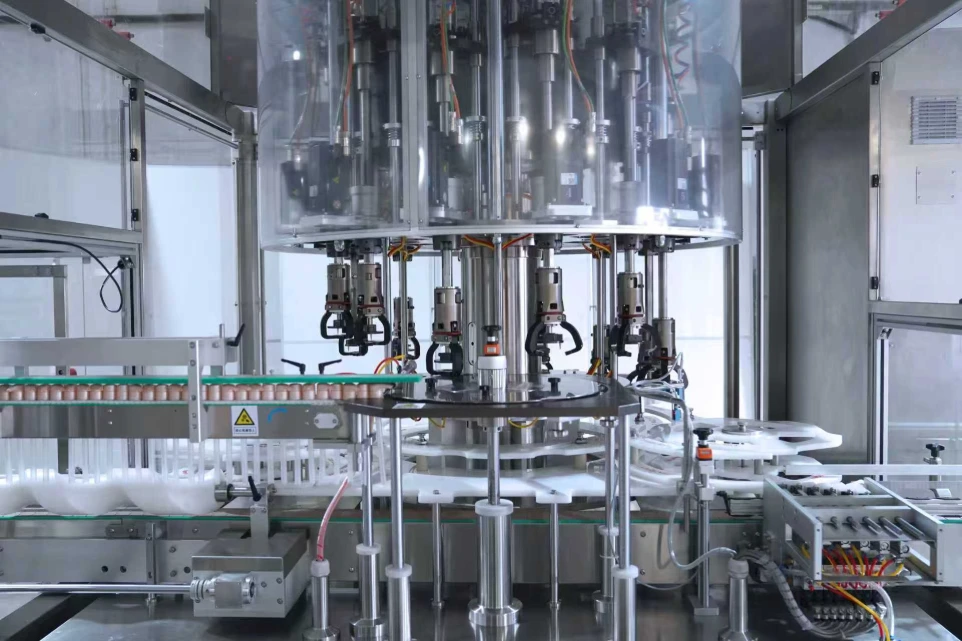
The intelligent line for hair care liquids. Bottom up servo dosing keeps surfactant formulas from foaming, positive shut off nozzles keep the neck dry, and servo torque capping seals fliptop cap and pump cap without a mark.
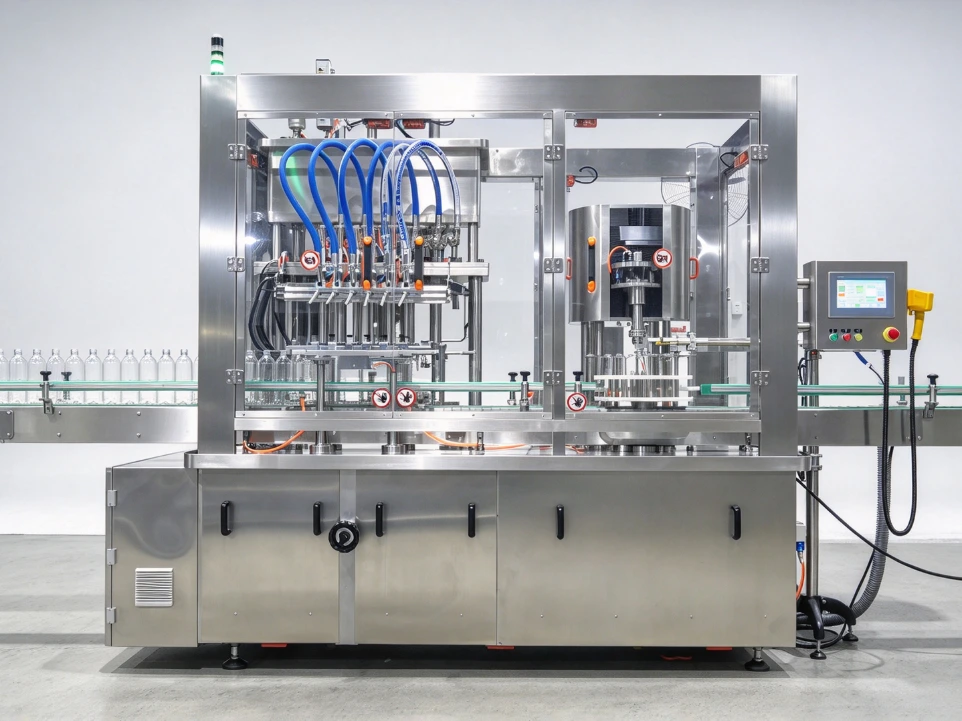
Automatic Servo Piston Tracking Lotion Filling Machine
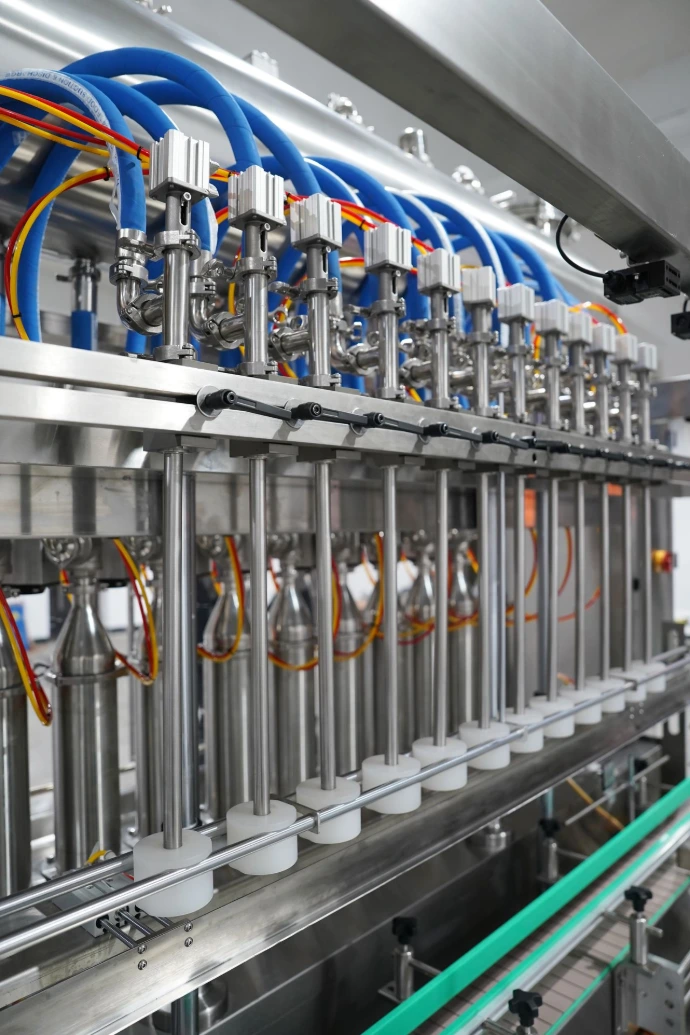
Main features
1. Safety: Equipped with digital interactive frames and machine interlocking to ensure safe filling operation. Comprehensive testing guarantees finished product safety.
2. Environmental friendly: Fitted with digital interactive outer frame for odor removal. It effectively collects dripping and leaking materials. The circulating cleaning shuttle supports product changeover.
3. Digitalization: Controlled by PLC+HMI. Software interfaces are reserved for data connection. Digital interactive frames display technical status clearly.
4. Intelligence: Integrated with vision, sensing and servo systems. Cooperated with PLC+HMI, it realizes 80% one-click production changeover of the filling machine.
5. Flexibility: Adopts tracking filling structure with servo adjustable railing. Fast specification change and strong adaptability for various bottle types.
6. High efficiency: Specification changeover only takes 20 minutes. The maximum capacity of the machine reaches 7200 bottles per hour.
Main parameters
Power supply: AC380V, 50/60HZ
Power: approximately 67KW
Air pressure:(0.6-0.7) MPa, dry, clean and stable gas source
Applicable bottle type: height 80-260mm, diameter 40-95mm
Production capacity: 50-1000ml ≤ 3600-7200 bottles/hour
Filling accuracy: within 200ml ± 1g; within 300ml-500ml, ±2g; 1000ml ± 4g
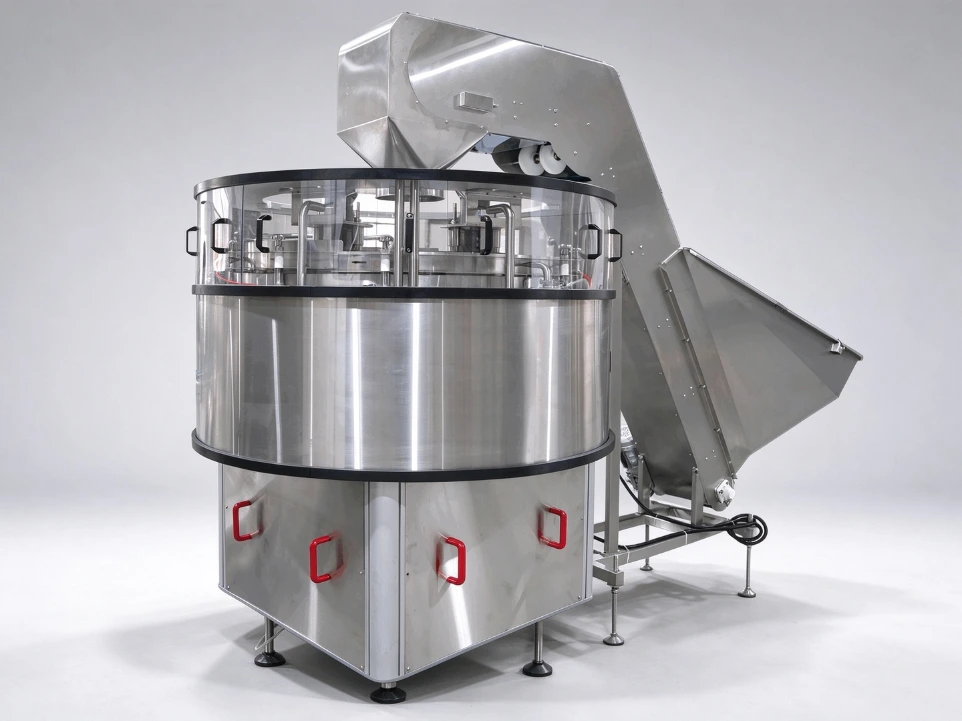
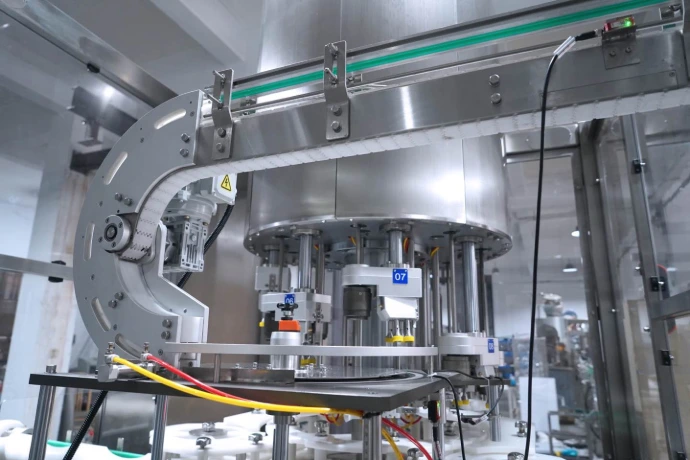
Automatic Pump Capping Machine with Cap Sorter and Elevator
Production introduction
The Automatic Rotary Pump Screw Capping Machine from RUN-TECH is engineered for medium to high speed packaging lines handling body lotion and cream products in the personal care and beauty cosmetics industry. This capping machine is designed to cap a wide range of closures used on lotion and cream packaging, including pump caps, spray caps, trigger caps and screw caps, ensuring precise torque control and leak free sealing across different bottle and jar types. Whether you need a standalone capping machine or a fully integrated line, RUN-TECH's capping equipment connects seamlessly with filling, labeling and conveyor systems. It reduces manual labor and delivers consistent, reliable capping to maximize your production efficiency.
Main parameters
Power supply: AC380V, 50/60HZ
Power: approximately 67KW
Air pressure:(0.6-0.7) MPa, dry, clean and stable gas source
Applicable bottle type: height 80-260mm, diameter 40-95mm
Production capacity: 50-1000ml ≤ 3600-7200 bottles/hour
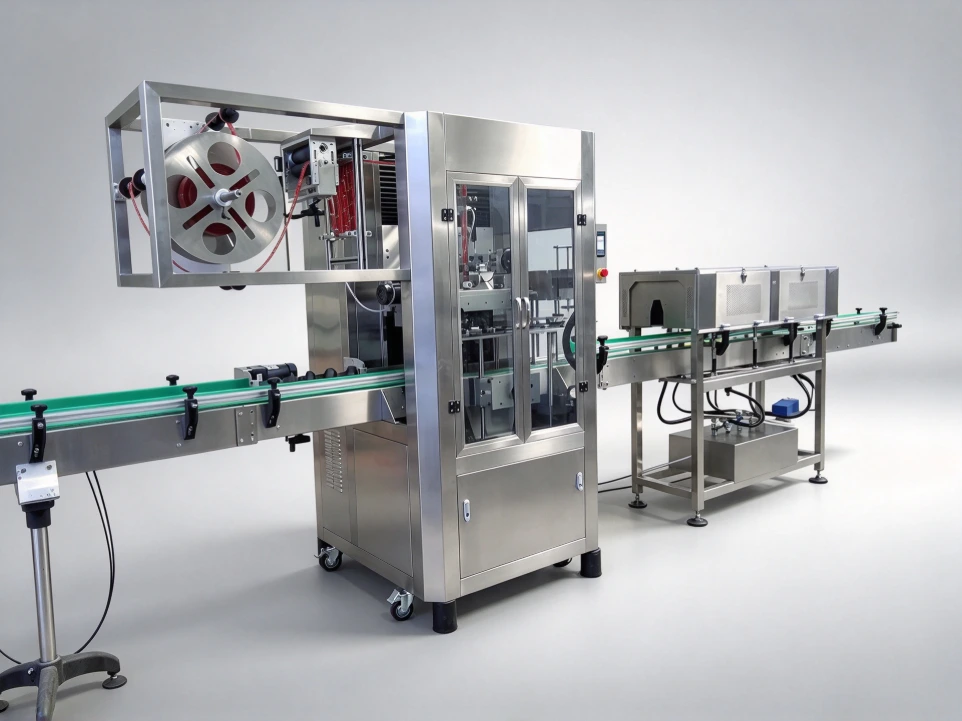
Intelligent High-precision Positioning Labeling Machine
Production introduction
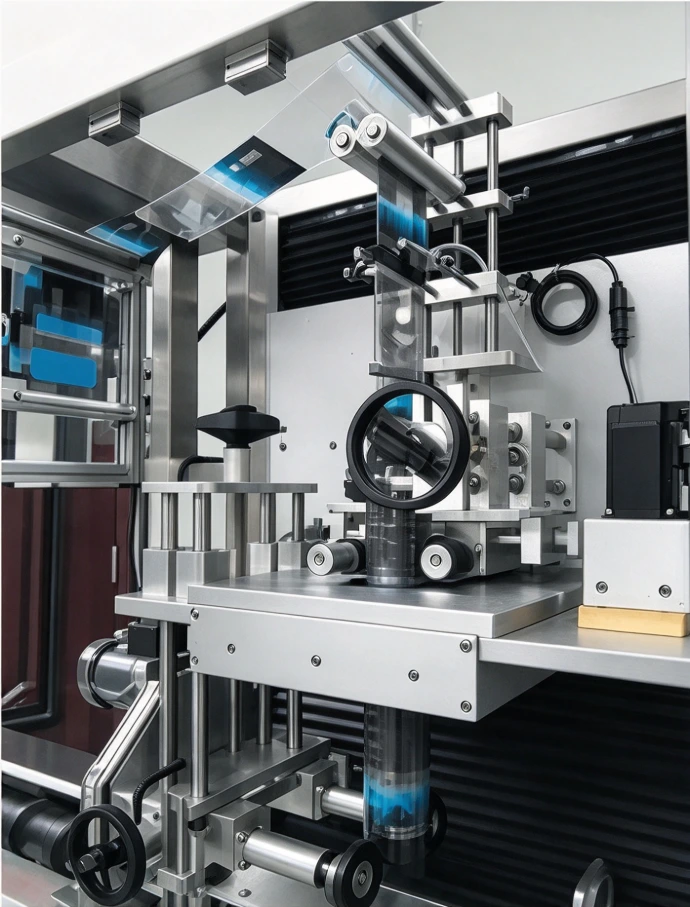
This Automatic Labeling Machine comes with comprehensive advantages covering safety, environmental friendliness, digitalization, intelligence, flexibility and high efficiency. It is equipped with safety protection frames and electrical interlocking devices to guarantee safe labeling operation, and full inspection helps avoid label misplacement and abnormal machine running. It features a waste label collection structure that effectively gathers leftover label backing paper and adhesive residues, and its easy-clean design supports fast product changeover. Controlled by PLC+HMI, the machine reserves communication interfaces for data connection, with the HMI panel clearly displaying running parameters and alarm status. Integrated with mark sensor, tracking and servo systems and working with PLC+HMI, it realizes 80% one‑click production changeover. It adopts a servo labeling structure with adjustable guiding rails, enabling fast specification change and strong adaptability for various round bottle types. Specification changeover only takes 20 minutes, and the maximum capacity of the machine reaches 7200 bottles per hour.
Main parameters
Power supply: AC380V, 50/60HZ
Power: approximately 67KW
Air pressure:(0.6-0.7) MPa, dry, clean and stable gas source
scope of application: round bottle diameter 40-95mm, height 80-260mm
label height: 50-580mm, length40-140mm
production capacity: 7200 bottles/hour
labeling accuracy: ± 1mm
Integrated Packaging Line Workflow
Container Air Rinsing
Ionized air cleaning removes static dust and particulates inside cosmetic glass and PET bottles prior to dosing.
Servo Piston Dosing
Bottom-up diving nozzles submerge and rise synchronously with liquid level to eliminate foam entrapment and splashing.
Pump Cap Placement
Mechanical guide channels align long dip tubes vertically for smooth insertion into bottle necks without jamming.
Servo Torque Tightening
Non-marking rubber chucks apply programmable rotational torque to seal pump closures cleanly without surface scratches.
Wrap/Body Labeling
Optical sensors register container orientation for precise pressure-sensitive labeling and batch code inkjet printing.
Engineering Deep Dive: Dosing & Capping Technologies
Dip Tube Orientation & Non-Marking Capping
Inserting long pump dip tubes automatically requires precise vertical alignment to prevent tube bending or snagging against the bottle opening. Our continuous-motion cappers utilize dedicated tube-guiding tracks that straighten the dip tube prior to neck entry.
Once seated, servo-driven capping chucks tighten the closure to a pre-set torque, eliminating cap damage, scuffing, or loose threads that lead to transit leaks. Learn more about choosing between pump cap and trigger sprayer cappers.
Servo Driven Positive Shut Off Nozzles
Standard open nozzles often leave stringy trails when dosing thick creams, contaminating bottle necks and preventing tight cap seals. Our bottom-up diving nozzles feature internal pneumatic shut-off valves that cut fluid stream cleanly at cycle completion.
Combined with closed-loop servo piston control, the system maintains volume consistency within ± 0.5%, whether handling light hydrating fluids or heavy body masks. For corrosive or chemical-based formulas, view our intelligent tracking chemical filling system.
Supported Packaging Formats
Round Glass/PET Bottles
Standard body lotion bottles with lotion pump dispensers or flip-top caps.
Wide-Mouth Cream Jars
Heavy body butter containers utilizing direct piston dosing and screw lid sealing.
Squeeze Tubes & Droppers
Specialized dosing configurations for high end facial serums, gels, and travel packs.
Flat & Oval Cosmetic Jars
Contoured containers requiring starwheel orientation for centered filling and capping.
Line Layout & Factory Floor Integration
Plan Your Floor Footprint Efficiently
Proper arrangement of bottle infeed turntables, buffer conveyors, and outfeed accumulation zones is critical to prevent line starvation or bottlenecks during high-speed production runs.
Whether integrating a standalone filler into an existing line or deploying a complete turnkey cosmetic bottling facility, proper spacing ensures operator accessibility and rapid changeover ergonomics.
Read our engineering guide on capping line layout and conveyor space requirements for detailed floor planning advice.
Key Footprint Factors
- Infeed Turntable: 800mm – 1200mm diameter buffer disc.
- Main Line Length: 4.5m – 7.0m total conveyor length.
- Clearance Zone: Minimum 1.2m around HMI cabinet for operator access.
- Utility Hookups: Clean compressed air (0.6-0.8 MPa) & 3-Phase power.
Key Operational Advantages
Viscosity Adaptability
Quick parameter selection on the HMI touchscreen enables seamless switching between light body lotion and thick body butter without swapping mechanical cylinders.
Rapid Format Changeovers
Tool-less adjustability, quick release guide rails, and saved HMI recipe parameters reduce container and cap size changeovers down to 15–20 minutes.
Drip-Free & Clean Bottle Necks
Positive shut off diving nozzles keep bottle necks and threads free of cream residue, ensuring reliable seal integrity and preventing liquid seepage during capping.
Cosmetic Sanitary Engineering
All liquid contact parts are built from SUS316L stainless steel with quick release tri clamp connections for rapid CIP flushing between product fragrances and colors.
Frequently Asked Questions
1.Can one line really run both shampoo and conditioner?
Yes, within the viscosity range on the spec sheet, up to 100,000 mPa·s. Each formula is stored as a recipe: fill volume, piston speed, top off speed, nozzle travel, capping torque and sleeve length. Switching between them is a recipe recall plus a short flush, not a mechanical change. The one item that does change is the nozzle bore, and only when the two products differ by more than about two viscosity decades.
2. How do you keep a 7,200 bph line from foaming?
Three things work together: the nozzle stays submerged for the whole fill, the last 15 percent is dosed at roughly 30 percent speed, and the shut-off valve closes at the nozzle tip so no air is pulled back through the product. A degassing valve on the hopper and a slow piston return keep entrained air out of the cylinder between cycles. If a formula still foams, we slow the top-off rather than the whole cycle, which costs a fraction of the output.
3. Do pump dip tubes bend during automatic capping?
Not when the tube is straightened first. A guide channel holds the dip tube vertical before the neck entry and insertion runs at about 20 mm/s, so the tube goes in straight instead of being pushed against the shoulder. The chuck holds the closure by its shaped pocket, not by friction, which also protects the actuator surface.
4. What changes between a 500 ml Boston and a 1 L family bottle?
Rails, pucks, nozzle pitch, fill volume, cap tooling and sleeve length. Changeover runs 15 to 20 minutes with hand-wheels that carry position scales: the previous SKU's settings can be restored from the scale and the recipe, without trial bottles. The 1,000 ml fill is held to ±4 g, which is the tolerance that keeps a 12-bottle case inside the declared net weight.
5. How is the line cleaned between formulas?
All product contact parts are SUS316L with tri-clamp connections, so the product path can be flushed and drained in about 15 minutes by hand or by a CIP skid. Nozzles, pistons and the header are the only wetted components; the capper and labeler see a dry bottle and need only a wipe-down.
6.My bottle is not on your format list. What then?
Send three empty bottles, three closures and a 2 litre product sample. We run them on the pilot line, set the rails and nozzles, and return a filled and capped sample with the measured fill weight and torque. Tooling is then drawn from your bottle, not from a catalogue.