RUN-TECH is a packaging machinery manufacturer with two manufacturing bases in Changzhou, Jiangsu — and the source manufacturer, not a trading company. Founded in 2021, we design, fabricate, assemble and test our machines in-house. Our designers and chief engineers have worked in this field for more than 15 years, and the sales, technical and after-sales teams built around them are fully mature. If you are comparing suppliers at the due-diligence stage, this page is for you.
An engineer's questions are specific: Where is the metal cut and welded? What actually happens during factory acceptance testing? We will walk the whole chain — design, fabrication, control, testing and delivery — and stick to facts you can verify during a review of our Changzhou manufacturing bases. Where a number is not published, we say so and offer to document it on request.
1. Packaging Machinery Manufacturing Bases in Changzhou
The company is Changzhou Run-Tech Machinery Co., Ltd., operating under the RUN-TECH / Runtech brand from Changzhou, Jiangsu Province. We established our first factory in Wujin District in 2021.And in 2026, we expand another factory in Xinbei district, Changzhou City, Jiangsu Province. Both sites are shown on our website, and buyers checking business licences can cross-reference them.
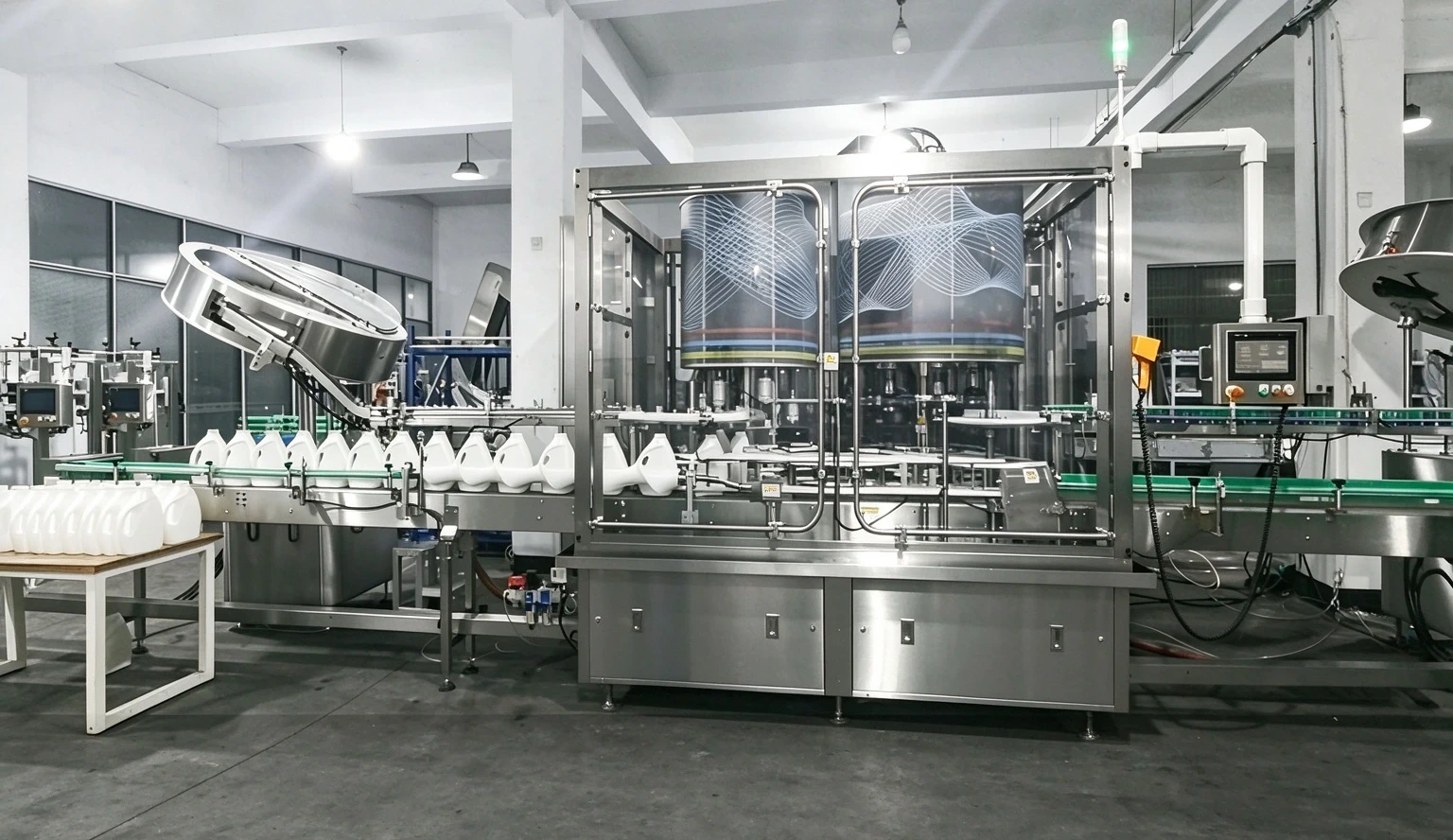
What this means in practice:
- Two manufacturing bases in Changzhou: Wujin (since 2021) and Xinbei (renovated in 2026).
- A workforce of 55: design engineers, machinists, assemblers, controls specialists and commissioning technicians, backed by designers and chief engineers with more than 15 years in this field.
- Annual output of around 40–45 capping machines, excluding cappers integrated into filling lines.
- Recognition as a high-tech enterprise, with our own engineering technology research centre for intelligent packaging equipment.
The research centre is where line layouts, filling kinematics and capping mechanisms are developed before a single frame is cut. Section 3 covers this.
Our market history is straightforward, and we would rather state it plainly. Before 2025 our main market was domestic, supplying listed companies and established brands including Unilever, Nutrich, Rainbow, REDLION, BLUE MOON and SUPER. Machines that went overseas in that period were exported through trading companies and third parties. Since the end of 2025 we have been building our own international market presence, as the source manufacturer rather than an intermediary. We already have an installed base in the GCC, especially Saudi Arabia; details of the machine models and applications in those installations are available on request.
Geographically, Changzhou sits in the Yangtze River Delta with direct access to Shanghai and Ningbo ports. That matters when a buyer is timing a container against a production launch.
2. Precision Fabrication & Material Selection
This is the section where most supplier websites overclaim, so we will be deliberately careful. RUN-TECH performs in-house fabrication of critical stainless-steel parts at our own bases. Frames, product-contact components and key structural pieces are made in Changzhou. That gives us control over material traceability, weld quality and fit-up: the three things that decide whether a machine still runs true after two years of caustic washdown.
Material selection is specified per product:
Material | Typical use | Reason |
SUS304 stainless steel | Machine frames and non-contact structures | Corrosion resistance with good formability and weldability |
SUS316L stainless steel | Product-contact parts and wetted paths | Higher resistance to chlorides, acids and cleaning agents |
PTFE / PVDF | Seals, linings and contact surfaces for corrosive products | Chemical inertness where even 316L is marginal |
A food customer filling a low-pH beverage and a customer filling a solvent-based liquid hand sanitiser should not receive the same wetted parts. We specify per application, and compatibility is confirmed during sample testing (see section 3).
Does RUN-TECH publish a CNC machine list? We do not publish machine brands, axis counts or a quoted machining tolerance on this page: a spec written for marketing is not the same as a spec you can hold a supplier to. What we can do is document it. Machine lists, workshop videos, drawings, sample parts and material certificates for the steel in your machine are available during a factory audit. If your qualification process needs a named machining centre or a measured tolerance on a specific component, ask for it and we will show you the equipment and the inspection record.
3. Design & Engineering: 3D Model to Line Layout
Every project starts as geometry. Our engineers build a 3D model of the machine and a 3D layout of the line before fabrication begins. The layout lets us check conveyor transfers, operator reach, maintenance clearance and the distance between a filling head and the capper on a real floor plan. For a turnkey project, this is the stage where a bottleneck is cheap to fix; on steel it is expensive.
How quickly can we return a layout and quotation? Within 24 hours of receiving your bottle, cap and line requirements, we deliver the 3D layout and a quotation. That turnaround is possible because the team works from a library of proven modules — piston fillers, servo cappers, label applicators — and configures them to the line.
Then comes the test most suppliers skip. We run your sample bottles and your product for free and issue a video trial report with a compatibility analysis. You see the machine handling your actual container. The analysis covers fill accuracy on your viscosity, cap seating, and whether the chosen contact materials behave with your formulation.
A typical sequence looks like this:
(1) You send samples — bottles, caps and a small quantity of product.
(2) We model the line and return the 3D layout plus quotation within 24 hours.
(3) The trial is filmed; you receive the video report and compatibility notes.
(4) Only after you approve the configuration does fabrication start.
4. Control Architecture & Motion Engineering
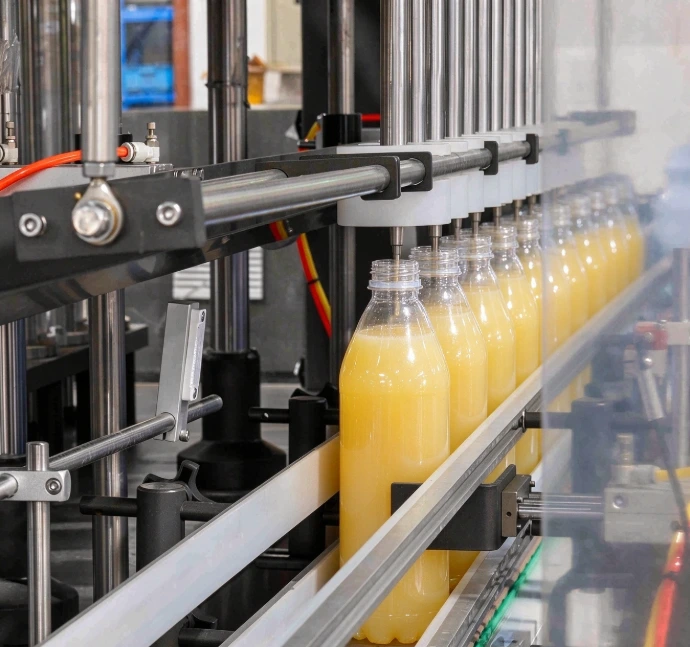
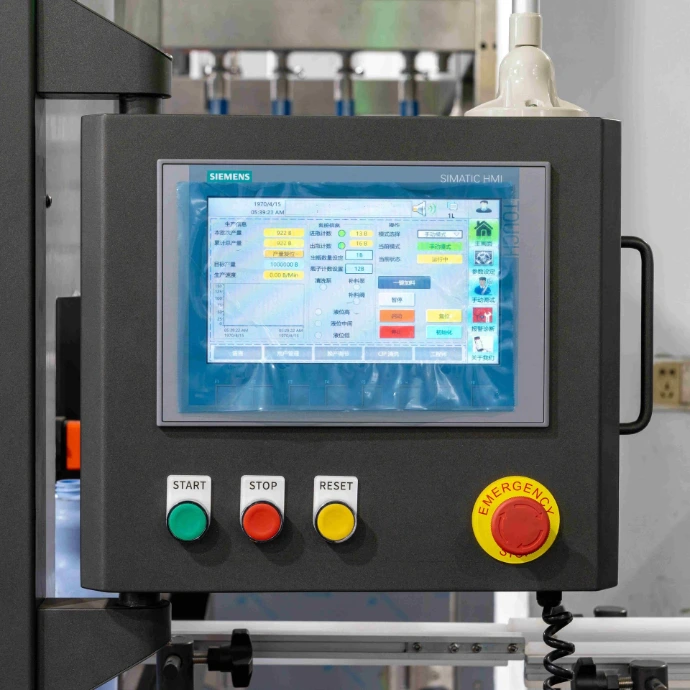
The control architecture is standardised enough to be serviceable anywhere in the world: a PLC with a touchscreen HMI, servo motors on the motion axes, and control logic written by our own engineers. On configured models, the PLC, touchscreen and servo drive are specified as Siemens components.
The numbers that matter to a process engineer:
· ±0.5% servo piston filling accuracy, held by closed-loop control of the piston stroke.
· Torque closed-loop capping, using high-resolution torque sensors with real-time feedback, so each closure is tightened to a set value.
· Optical-eye positioning with servo tracking for capping in motion: the head follows the bottle.
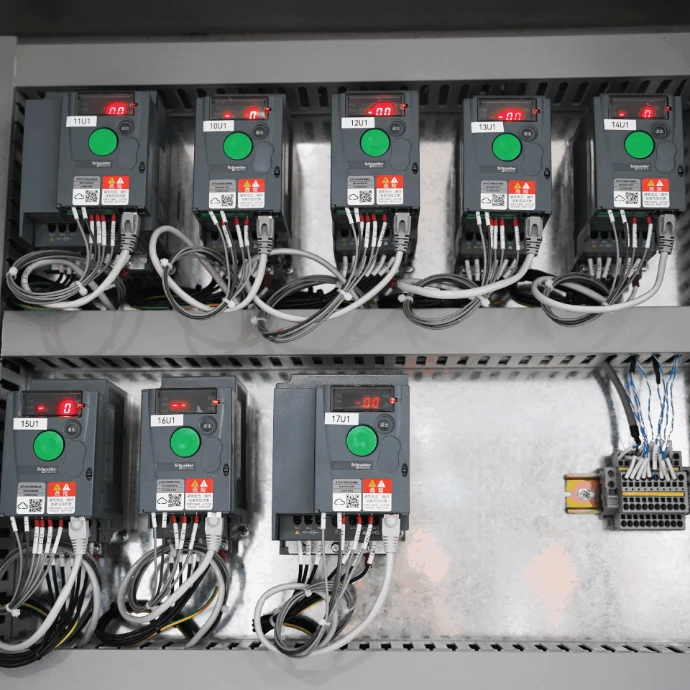
Function | Engineering approach | What it protects |
Piston filling | Servo driven stroke with closed loop feedback | Dose consistency across viscosity and speed changes |
Cap tightening | High resolution torque sensor, real time feedback | Under torque leakage and over torque thread damage |
Cap positioning | Optical eye + servo tracking | Misalignment at higher line speeds |
If you want to see what happens when torque control drifts, our guide to how torque drift causes loose caps covers the failure modes in detail.
These are the control layers behind our automatic filling machines and capping machines. A rigid frame and good steel make a machine durable; the servo and the torque loop make it repeatable.
5. Specialty Closures: Pump Caps & Trigger Sprayers
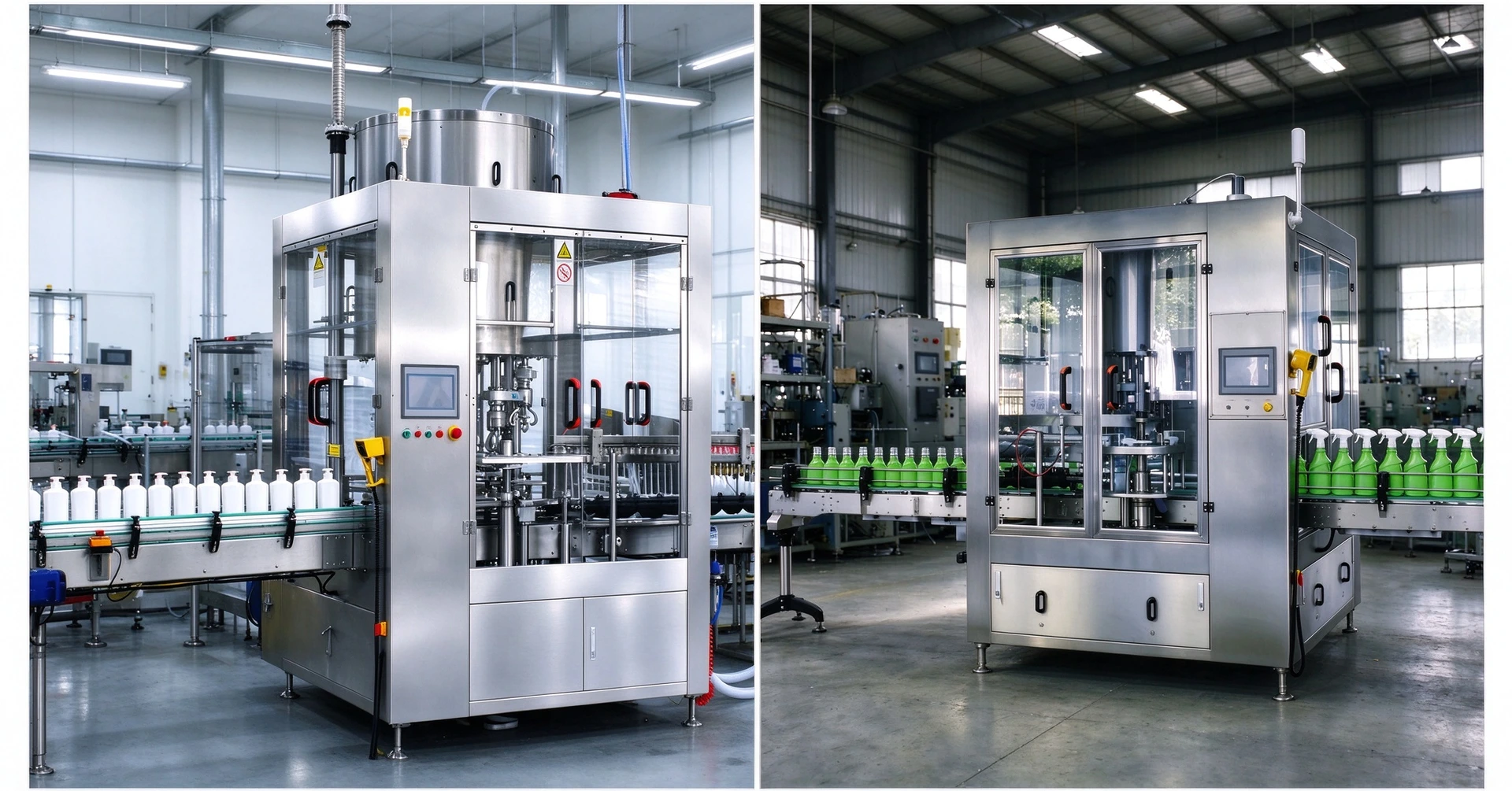
Pump caps and trigger sprayers are the closure types that separate a general capping machine from a specialist one. A standard cap tool assumes a flat, symmetrical top. A pump head has a stem; a trigger sprayer has a protruding handle. Our comparison of pump caps and trigger caps sets out the tooling differences. Apply a conventional chuck and you pinch the pump mechanism, strip the thread or cosmetically damage the cap — often at speed, and often only noticed downstream.
Our capping mechanism is designed with clearance reserved for the pump stem and the trigger handle. The tool grips the cap body and drives it to torque without loading the moving parts. That single design decision is why pump and trigger formats are a speciality.
The measured results:
- 99.8% capping pass rate on qualified sample trials.
- ≥99.9% for press-fit and rotary cap assembly.
- CPK > 1.33 on the assembly process: a capability index above the 1.33 threshold, meaning the process holds specification across normal variation.
If your product uses a pump, a trigger, a child-resistant cap or another non-standard closure, send us the actual component. The sample test in section 3 is the honest way to confirm fit, and it costs you nothing but the courier.
6. Quality Control & Factory Acceptance Testing (FAT)
How does RUN-TECH run Factory Acceptance Testing? Every machine goes through a 24-hour continuous FAT before shipment. Not a spot check — a full day of running.
Two conditions make that test meaningful. First, we test with your own sample bottles and your own liquid, so the result reflects your viscosity, your container tolerance and your closure. Second, the acceptance criteria are defined and binary: zero leakage and accurate dosing against the agreed fill target. A machine that weeps at hour nineteen has failed, even if it was perfect at hour one.
What a buyer should ask for, and what we provide:
· The FAT protocol with the agreed acceptance criteria before the test.
· The trial report and video from the run on your samples.
· Confirmation of the contact materials actually installed.
· Final inspection records for the machine against the 3D layout and configuration.
Quality control does not end at the test bench. The configuration that passed FAT is the one that ships, and the documents listed above are supplied with the quotation.
7. Certification Scope & Documentation
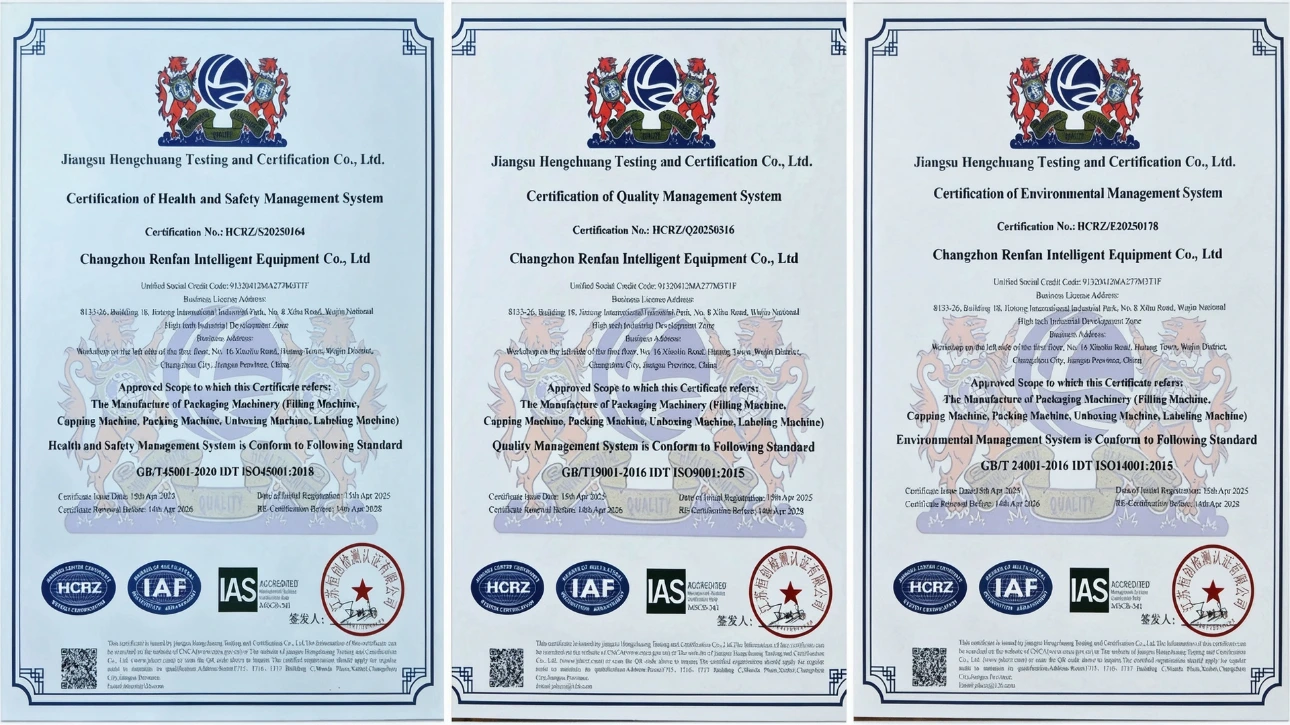
RUN-TECH holds ISO 9001:2015, ISO 45001:2018 and ISO 14001:2015 certification. Each covers a defined area: quality management, occupational health and safety, and environmental management respectively.
On CE marking, we work machine by machine. A machine can be supplied with its own independent CE certificate, issued at the customer's request. The ownership of that certificate belongs to the customer, and we do not keep it. The document is made for your configuration and stays with you.
The useful question for a regulated buyer is not "are you certified?" but "which certificate covers my configuration?" Request the documents for your model and we will send the applicable declarations with the quotation.
8. Turnkey Projects & Commercial Terms
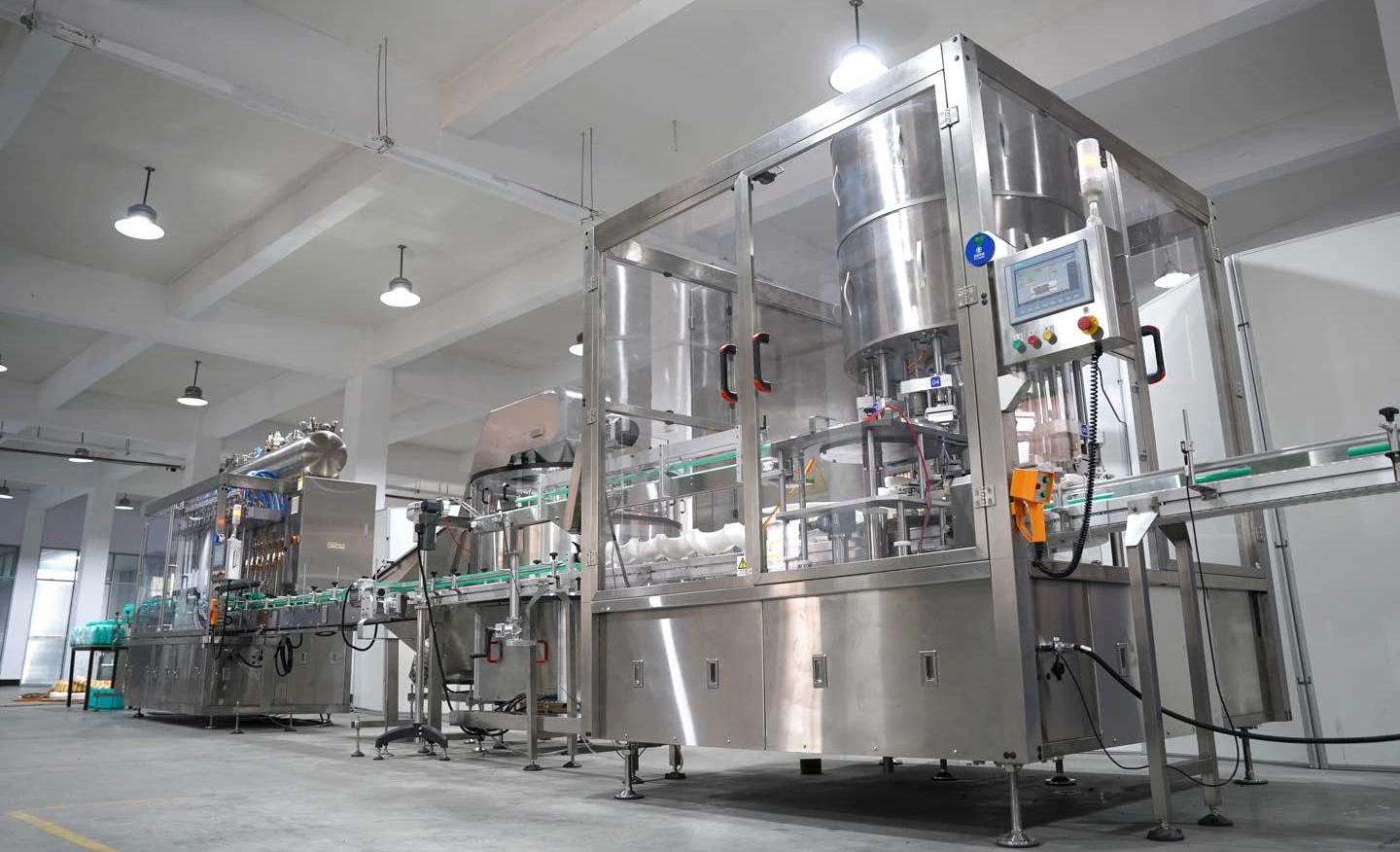
Standard machines are a starting point. RUN-TECH builds turnkey projects, including Industry 4.0 intelligent chemical plants, where filling, capping, labelling systems and downstream handling are integrated into one line under a single control scheme. Customization starts with the 3D layout in section 3 and ends with a line that fits your floor, your bottle and your output target.
Commercial terms, stated plainly:
Item | Our position |
Lead time — standard single machine | Typically 15–30 days |
Lead time — complete line | Typically 30–45 days |
Warranty | 18 months |
Quotation | Professional, detailed and competitive |
Installation & training | On time and on site: installation, commissioning, direct operation and training |
After-sales service | Permanent and on time |
Remote support | Fault diagnosis by remote access or from your description; remote control to resolve program issues |
Spare parts | Supplied directly by the source manufacturer, at a lower cost than through an agent; wear-part stock recommended before shipping |
Export packaging | Moisture-proof film + export-standard wooden crates |
Three commitments define how we work after the order is signed. The quotation is professional, detailed and competitive. Installation and commissioning are on time and on site, with direct operation and training for your team. After-sales service is permanent and on time: if a fault occurs, our engineers help define the error point by remote access or from your description. Program issues are resolved through our remote control function; if a spare part is the cause, we supply it directly. Because we are the source manufacturer, spare parts are more direct and cheaper than going through an agent, and before shipping we recommend that customers stock a set of wear parts. Machines ship wrapped in moisture-proof film and packed in export-standard wooden crates, because a precision assembly is only as good as the condition it arrives in. All of these items can be written into the official agreement.
Conclusion
RUN-TECH is the source manufacturer, with two production bases in Changzhou, a workforce of 55 and an annual output of around 40–45 capping machines. Founded in 2021, we draw on designers and chief engineers with more than 15 years in this field, and on mature sales, technical and after-sales teams. We hold ISO 9001:2015, ISO 45001:2018 and ISO 14001:2015 certification, and issue independent CE certificates per machine on request, with ownership remaining with the customer. On the engineering side, the verifiable numbers are ±0.5% servo filling accuracy, 99.8% capping pass rate, CPK above 1.33 and a 24-hour FAT on your own samples with zero leakage as the bar. An 18-month warranty sits behind all of it.
The claims above are the ones we are willing to put in writing — including the quotation, on-site commissioning and training, and the permanent after-sales commitment, all of which can go into the official agreement. The ones we cannot summarise in a paragraph — machine lists, workshop footage, inspection records — are available when you audit us.
Send us your bottle samples, along with caps and a small quantity of product. We will return a 3D line layout, a quotation and a video of your container running within 24 hours.