Disinfectant & Bleach Packaging
Packaging liquid chlorine bleach, quaternary ammonium disinfectants, alcohol based sanitizers and hydrogen peroxide cleaners demands strict control of three variables: chemical compatibility of the wetted path, gas venting at the closure and zero drip fill accuracy.
Main Products
Corrosive Liquid
Filling Machine
Bleach Cap
Capping Machine
GHS Label Applicator
Integrated Packaging Line Workflow
Bottle Unscrambling and Ionized Air Rinsing
HDPE bottles are oriented on the infeed turntable and blown clean with ionized air to remove dust and plastic flash before dosing.
Corrosion Resistant Servo Dosing
Bottom up diving nozzles enter the neck, dose at controlled flow rate and rise with the liquid level to limit foam and chlorine vapor release.
Vented Cap Placement
A dedicated cap feeder sorts two piece vented caps and press on tooling seats them vertically without damaging the vent hole.
Programmable Torque Tightening
Servo chucks seal each cap to a preset torque window, and a load cell audits every closure before the bottle leaves the station.
GHS Labeling and Batch Coding
The applicator places the hazard label and the inkjet head prints batch and expiry data, then the bottle transfers to case packing or shrink wrapping.
Engineering Deep Dive
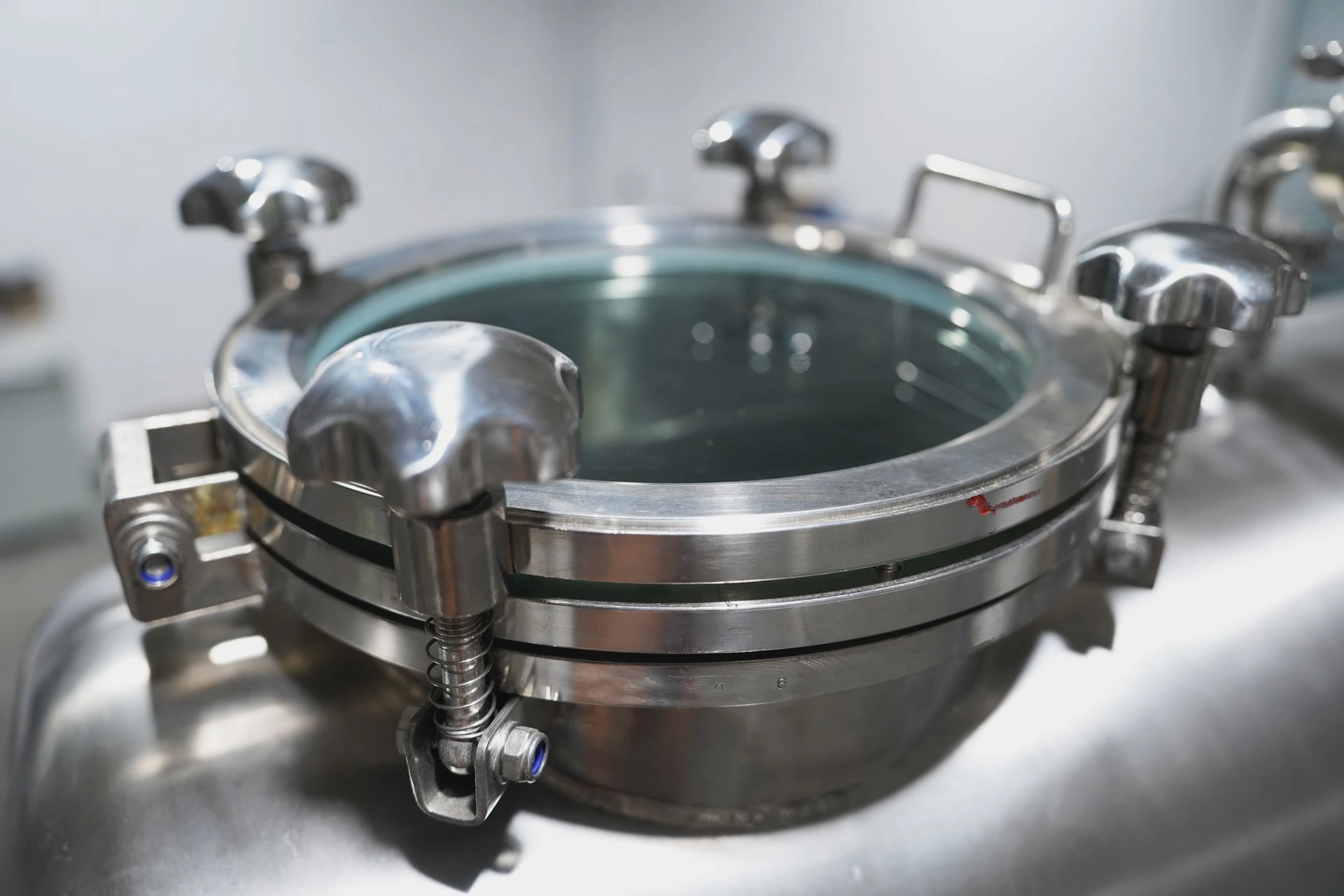
Material Compatibility With Sodium Hypochlorite
Sodium hypochlorite attacks most common metals and accelerates corrosion wherever a scratched surface or an exposed spring creates a crevice. Our wetted path avoids 304 stainless steel, carbon steel, aluminium, copper and brass completely. Product contact parts are built from PVDF, PTFE, rigid PP and PVC, with passivated 316L or Hastelloy C276 used only where mechanical strength is required. Diaphragm and peristaltic pump options keep the motor and gearbox outside the chemical zone, and every threaded joint is sealed with PTFE gaskets rather than elastomer O rings that swell in oxidising media.
Venting and Closure Integrity
Hypochlorite slowly decomposes and releases gas inside a sealed bottle, so a rigid closure without a vent path builds pressure and distorts the container. Two piece vented caps solve this by releasing gas through a micro channel while the inner seal keeps liquid in. Our capping station controls three variables: press on depth to 0.2 millimetre tolerance, torque inside a 2 newton metre window, and cap liner compression. Combined with an induction sealer for foil sealed formats, the result is a closure that survives drop testing and pallet stacking without weeping at the threads.
Flammable and Vapor Safety
Quaternary ammonium disinfectants and surfactant loaded cleaners foam heavily when poured from height. Our nozzles dive to the bottom of the bottle and withdraw at a speed matched to the rising liquid, so the liquid never free falls. A closed loop servo system reads the flow meter every cycle and corrects piston stroke in real time, holding ±0.5 percent accuracy across a 500 ml to 5 L range. Degassing time is programmable per recipe, which keeps headspace consistent for the subsequent capping and labeling steps.
Main Features
Security
Digital interactive frames ensure safe operation, machine interlocking guards the filling zone, and a separate purge sequence flushes residual chemical from nozzles before maintenance. Comprehensive pressure and leak testing validates every finished container.
Environmentally friendly
Closed vapor extraction connects directly to the scrubber, an effective drip collection tray recovers product from nozzles and cap chutes, and a circulating rinse shuttle speeds safe product changeover.
Intensification
The line layout is compact and occupies less floor space. One operator runs filling, capping, labeling and packing, and the whole line needs only one HMI to coordinate.
Digitization
All devices are powered by PLC plus HMI, every machine exposes a software interface for MES connection, and digital interactive display frames show live torque, fill volume and rejection data.
Flexibility
Bottle sorting, robotic case erecting, case packing, palletizing, tracking filling and servo adjustable guide rails support fast specification changes across small household bottles and 5 L jugs.
Efficient
Product changeover takes only 20 minutes, and the maximum capacity of the whole line reaches 7,200 bottles per hour on 500 ml formats.
Main Paramenters
Power supply: AC380V, 50/60 HZ
Single line power: approximately 45 KW
Air pressure: 0.6 to 0.7 MPa, dry, clean and stable supply
Single line air consumption: 1.0 cubic metre per minute
Applicable container: height 80 to 320 mm, diameter 40 to 120 mm
Production capacity: 500 ml to 1 L at 3,000 to 7,200 bottles/hour, 1 gallon jugs at 1,200 to 2,000 jugs/hour
Filling accuracy: ±0.5 percent volumetric, within 500 ml plus or minus 2 g
Cap torque range: 8 to 30 newton metres, tolerance 2 newton metres
Labeling accuracy: ±1 mm
Product contact material: PVDF, PTFE, PP, PVC, passivated 316L, Hastelloy C276 optional
Viscosity range: 1 to 20,000 mPa.s
Protection class: IP65, Ex d IIB T4 explosion proof version available
Product temperature at filling: 5 to 30 degrees Celsius
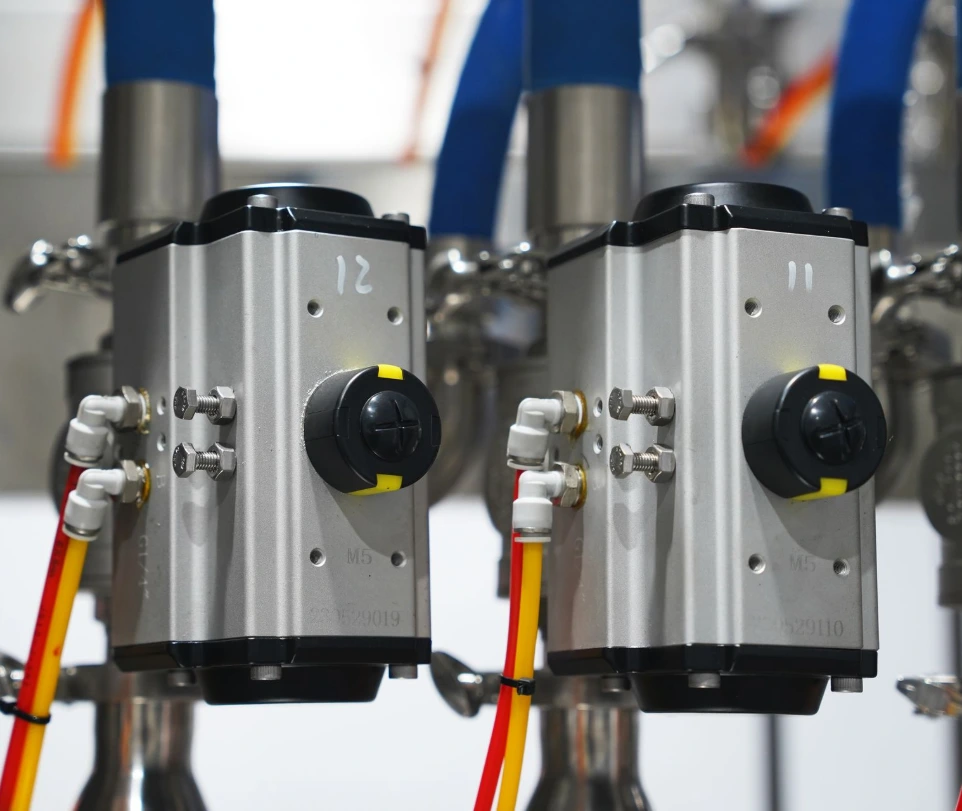
Supported Packaging Formats
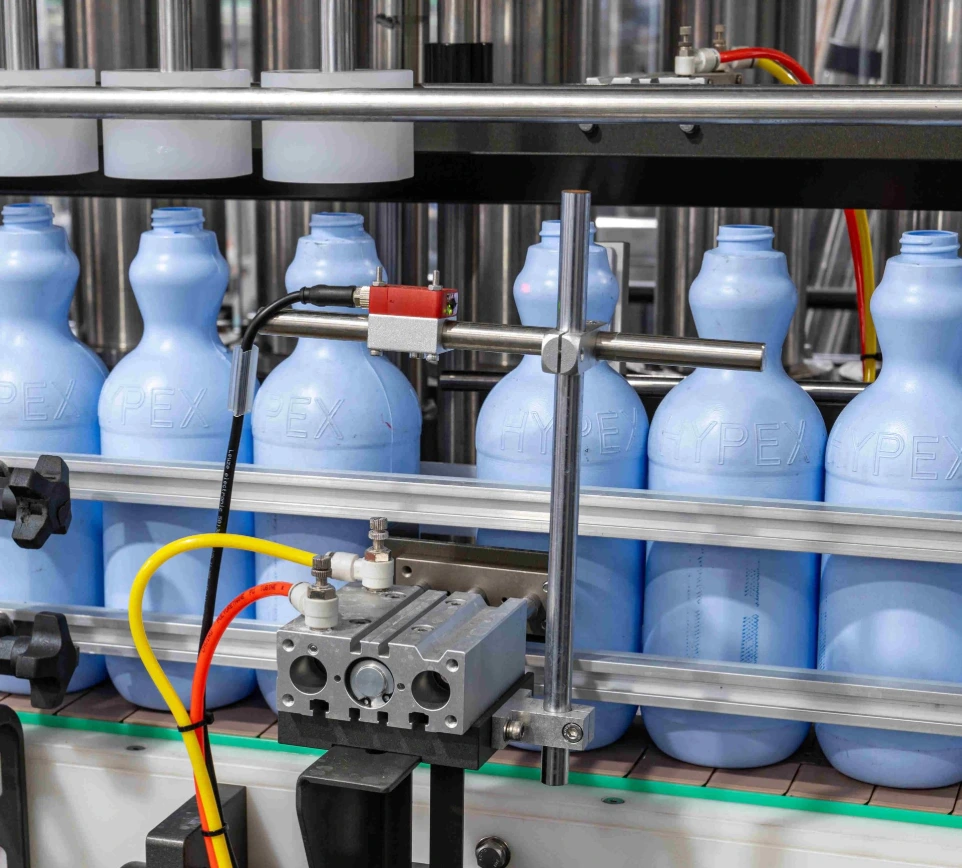
Household HDPE Bottles
750 ml to 1.5 L bleach and disinfectant bottles with vented two piece caps or child resistant closures.
Professional Jugs and Large Containers
1 gallon and 5 L jugs requiring high torque sealing, integrated handles and stackable case packing.
Trigger Sprayer Bottles
Ready to use disinfectant sprayers needing sprayer press on, leak free neck finishes and orientation aligned labeling.
Wide Mouth Jars and Tubs
Disinfectant wipes, powder cleaners and gel products filled by direct piston dosing with screw lid sealing.
Drums and IBC Containers
200 L concentrate filling with bulk head couplings, drum capping and hazardous goods labeling.
Line Layout and Floor Integration
Proper arrangement of bottle infeed turntables, buffer conveyors and fume hood extraction is critical to prevent line starvation and to keep vapor away from operators. Whether you integrate a standalone filler into an existing chemical filling room or deploy a complete turnkey hygiene product bottling facility, the layout must leave room for secondary containment and rapid changeover ergonomics.
Key Footprint Factors
Infeed turntable: 800 to 1200 mm diameter buffer disc. Main line length: 6.0 to 9.0 m including filling hood and capping station. Clearance zone: minimum 1.2 m around the HMI cabinet for operator access. Utility hookups: clean compressed air at 0.6 to 0.8 MPa, three phase power, exhaust duct to scrubber, eyewash and safety shower within 10 m.
Key Operational Advantages
Corrosion Resistant Wetted Path
PVDF and PTFE contact parts outlast stainless steel in hypochlorite service, and quick release tri clamp joints allow fast inspection without cutting lines.
Drip Free Necks and Threads
Positive shut off nozzles cut the liquid stream cleanly at cycle end, so no residue reaches the cap thread and no seal is compromised.
Vent and Torque Closed Loop
Cap presence, press depth and torque are inspected on every bottle, and out of window closures are rejected before packing.
Rapid Format Changeovers
Tool free guide rail adjustment and saved HMI recipes reduce container and cap size changes down to 15 to 20 minutes.
FAQ
Use PVDF, PTFE, rigid PP, PVC, passivated 316L stainless steel or Hastelloy C276. Avoid 304 stainless steel, carbon steel, aluminium, copper and brass, because hypochlorite attacks them and produces corrosion products that discolour the product.
Hypochlorite decomposes slowly and releases gas. A vented two piece cap lets gas escape through a micro channel while the inner seal retains the liquid, which prevents bottle bulging, cap lifting and leakage during storage and transport.
Yes, but the alcohol line needs the Ex d IIB T4 explosion proof option, static dissipative rails and LEL monitoring. Wetted parts and tubing are dedicated per product family to prevent cross contamination between oxidisers and flammable formulas.
We control press on depth, cap torque and liner compression within a closed loop, then audit each closure with a load cell. Combined with tamper evident banding or induction sealing, bottles pass drop testing and pallet stacking without weeping.
Yes. A static mixer with flow meter ratio control dilutes concentrate to the target concentration at the filler inlet, and the recipe system logs the ratio for each batch.
Send us your bottle sample, cap sample and product safety data sheet. Our engineers will confirm the compatible wetted material, propose a dosing and venting configuration, and run a trial on our test line. You receive a filled sample video, a torque and accuracy report and a line layout drawing within five working days.